Technology
Total emission removal
One integrated system turns flue gas, industrial waste, food waste and algae production into permanent carbon storage and saleable products.
How it works
Capture, convert, grow and recirculate
01
Capture
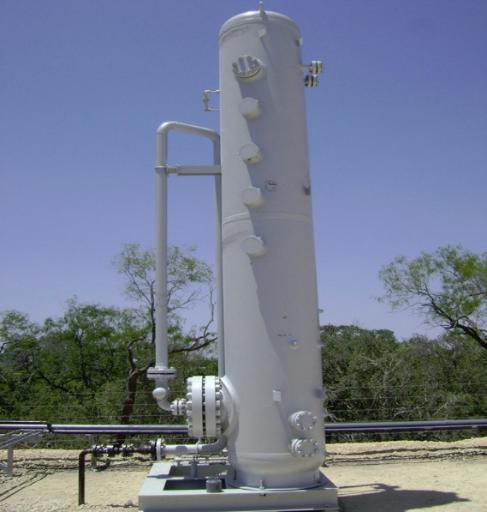
CO₂, SOx and NOx enter the gas tower.
02
Mineralise
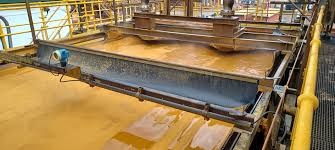
Alkaline waste converts carbon into stable aggregate.
03
Grow
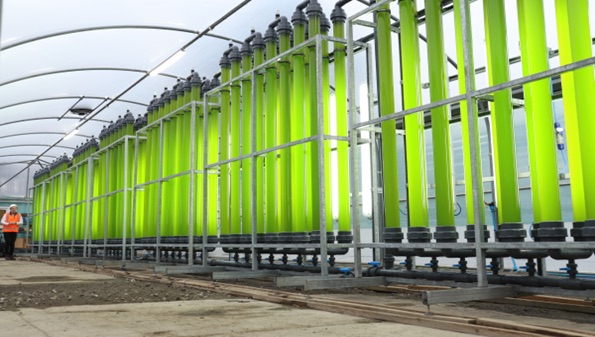
Cleaned CO₂ and food waste feed algae production.
04
Electrolyse
Alkaline H₂O produces H₂ and O₂ for resale.
Integrated outputs
Aggregate · Calcium carbonate · Proteins · Lipids · Biochar · H₂ · O₂
Step by step
The process in detail
01
Power plant or factory
Where a process creates heat, CO₂ and NOx/SOx gases are emitted. Industrial waste such as fly ash, BOS slag and oil shale ash is also created.
02
Algae process
Remaining flue gas — NOx and some CO₂ — feeds an algae system that converts pollutants into biochar mulch, fish feed, proteins and lipids.
03
Capture system
Patented bubbler systems capture CO₂ and SOx in water, creating an acidic liquid for sequestration. This water can be extracted from food waste.
04
Electrolysis
The liquid solution goes through our electrolyser, creating green hydrogen and oxygen, which can be fed back to reduce fossil fuel use.
05
Industrial waste mixing
The acidic solution is mixed with alkali industrial waste, forming calcium carbonate and aggregate — or a clinker replacement with RCA.
06
Verified and permanent
Each step is measured, giving detailed, auditable verification of permanent sequestration.
Permanent sequestration at scale
Permanent sequestration
Our approach focuses on permanent sequestration across industrial processes, power generation and cement production — a scalable, effective strategy for environmental management.
Gigatonne scale impact
With the ability to reach gigatonne scale, C-Zero's solutions have the potential to make a substantial impact on global carbon emissions.
See how it could work on your site
Tell us about your flue gas and waste streams.